THE SYSTEM
What Pro-Style, Spread, and Air Raid Offenses Actually Demand from a Quarterback
Fourteen desk1073 wordsQuarterbacks
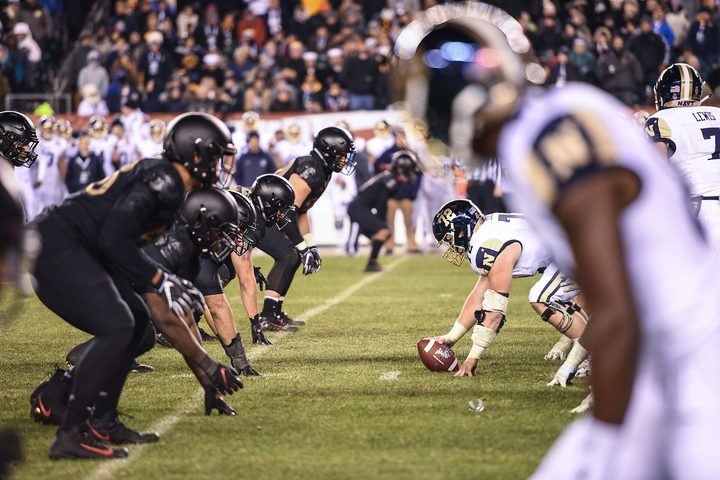
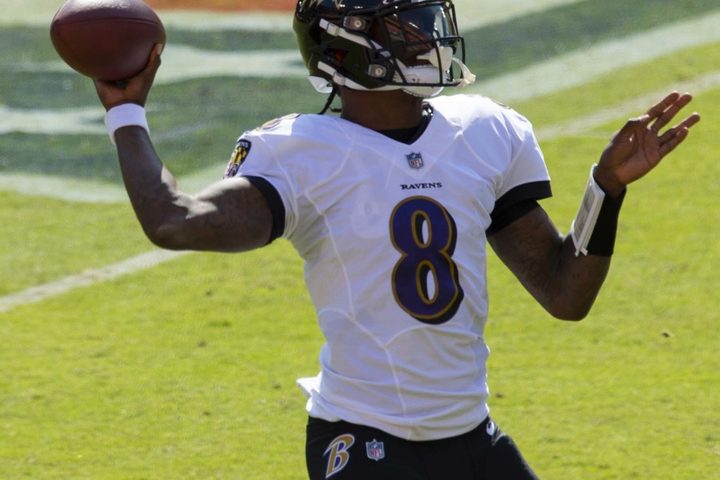
Foto: U.S. Department of Defense Current Photos / Wikimedia Commons · Public domain
ESPN outlined four specific developments that drove the spread revolution across football: the Air Raid, the zone read, tempo, and the run-pass option. Coaches quoted in that report described modern offensive play as being "about conflict," specifically placing defenders with dual run and pass responsibilities into positions where any choice they make is wrong.
When an offense is described as pro-style, spread, or Air Raid, coaches and evaluators are rarely debating aesthetics. They are describing how much cognitive burden the playbook assigns to the quarterback before the snap, how the system distributes routes across the field, and how footwork matches passing progressions.
The differences come down to pre-snap identification versus post-snap reaction.
| System Family | Primary Alignment | Passing Identity | Primary Read Structure |
|---|---|---|---|
| Spread | Shotgun, 3-5 WRs | Balanced run/pass | Conflict defenders |
| Air Raid | Shotgun | High-to-low / Mesh | Fixed 3-step drop |
| Pro-Style Spread | Shotgun or balanced | West Coast or Vertical | Full-field progression |
Formation, Tempo, and the Mechanics of Conflict
According to documentation on the spread offense, the baseline spread scheme typically aligns the quarterback in the shotgun while deploying three, four, or five receivers across the formation. Spreading personnel horizontally forces the defense to defend from sideline to sideline.
It is a common error to treat the spread as an exclusively pass-heavy design. The system can prioritize either the run or the pass with equal force. By removing extra defenders from the box and placing them near the boundaries, an offense creates clean numbers for an interior run game or isolates defensive backs in open space.
Spread attacks also lean heavily on a no-huddle operation. By pairing rapid tempo with sideline-to-sideline spacing, the quarterback operates as an on-field distributor. In run-pass option designs and zone-read concepts, the quarterback does not execute a full-field progression across four different receivers. The read is often immediate: isolate the single conflict player—an unblocked edge rusher or an overhang linebacker—observe his initial movement, and either hand the ball off, keep it, or throw behind the vacated coverage space.
The physical demands here centre on quick ball handling and sudden decision-making. If the read defender steps forward to fill the run fit, the ball goes to the perimeter. If the defender drops into the passing lane, the ball stays inside with the running back.
The Air Raid: Shotgun Drops and High-to-Low Progressions
The Air Raid represents an offshoot of the broader spread tree with a distinct mechanical and conceptual identity. Instead of managing a voluminous playbook, Air Raid systems rely on intense repetition of a compact set of pass concepts.
A high school installation guide published by ENC FCA in November 2020 noted that an Air Raid install can centre on practicing just one dropback pass, one quick game concept, and one run play each day. Mastery replaces volume.
Notes from a coaching clinic by Chris Hatcher show that the Air Raid quarterback takes a three-step drop from the shotgun and consistently reads concepts from high to low. Footwork connects directly to the progression. On specific passing plays documented in Hatcher's notes, the quarterback works through a set sequence: cross first, dig second, and shoot third, all while maintaining rhythmic footwork within that three-step drop.
Historical clinic materials documenting Kentucky's Air Raid offense, highlight core foundational designs including mesh, V-cross, and quick screens. In these structures, the route patterns create natural horizontal and vertical rubs against man coverage, or settle into voids against zone.
The Air Raid quarterback rarely changes protections at the line or checks into elaborate run-blocking schemes. The quarterback's job is rapid processing: take the snap, hit the third step of the drop, identify the high route, and work methodically down to the checkdown if the deeper routes are capped. The system trades scheme complexity for execution speed.
Pro-Style Schemes and Balanced Spacing
While pure spread and Air Raid schemes spread the field to isolate defenders, pro-style systems balance multiple passing philosophies with structured ground attacks. A classification published on Operation Sports outlined that pro-style offenses generally rely on either West Coast or Air Raid passing principles, or vertical downfield concepts, paired with either zone or power running schemes.
Pro-style does not mean operating at a glacial pace. Analysis published by Football Study Hall pointed out that teams frequently run pro-style passing and running concepts while using up-tempo pace and spread formations.
Football Study Hall defined this hybrid as the "pro-style spread." This configuration uses wide receiver spacing, no-huddle tempo, and option elements to support traditional, balanced run and pass concepts.
Where the pro-style architecture separates itself is in the pre-snap and post-snap demands placed on the passer. In these offenses, the quarterback is responsible for diagnosing defensive fronts, setting slide protections, and identifying blitz packages before the ball is snapped. After the snap, rather than simply reading an isolated conflict defender, the quarterback must often scan from one side of the field to the other, moving through a complete progression that includes timing-based intermediate routes.
Footwork in a pro-style system is diverse. A quarterback cannot rely solely on a standard three-step shotgun drop. The position requires marrying drop depths—three-step, five-step, or seven-step drops—to the exact depth of the targeted route stem.
Evaluating Quarterback Load Across the Three Families
When evaluating what an offense asks of a quarterback, system labels serve as shorthand for specific mental and physical workloads.
| System Style | Core Quarterback Requirements |
|---|---|
| Spread Offense |
|
| Air Raid Offense |
|
| Pro-Style / Pro Spread |
|
In a pure spread system, the quarterback operates primarily as an executioner of conflict reads. The scheme creates wide windows by forcing defenders to declare their intentions immediately at the mesh point.
In the Air Raid, the quarterback functions as a high-repetition distributor. The system demands that the passer master identical dropback timing across concepts like mesh, V-cross, and quick screens, processing high-to-low reads without hitching or delaying the throw.
In pro-style and pro-style spread systems, the playbook shifts structural responsibility onto the passer. The quarterback must recognize coverage rotations, verify protection rules, and execute multi-read progressions that span both halves of the field.
Modern playbooks continue to blend these concepts, pairing Air Raid mesh routes and spread option tags with pro-style vertical protections. The true distinction between these systems lies in how much calculation happens before the snap versus how much reaction occurs during the drop.