THE CLOCK
College Football Clock Rules and the Mechanics of Offensive Tempo
Fourteen desk1111 wordsThe Game
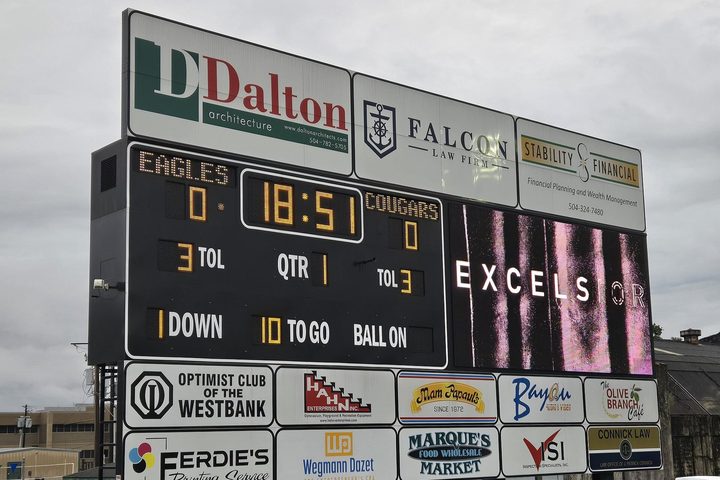
Foto: Spatms / Wikimedia Commons · CC BY-SA 4.0
On April 21, 2023, the NCAA approved timing rule changes for Divisions I and II that altered how game time elapses across college football. The governing body removed the routine stoppage of the game clock after every first down, preserving that pause exclusively for the final two minutes of the second and fourth quarters.
Fast offensive pace is not an attitude. It is a calculation governed by two separate clocks, strict refereeing mechanics, and defensive substitution protocols. Offenses do not create tempo by running faster between whistles. They create tempo by compressing the dead-ball interval against the play clock while the game clock ticks down.
The Dual Play-Clock Framework: 40 Seconds Versus 25 Seconds
College football operates on two distinct play-clock durations governed by rules.
Under normal scrimmage conditions, the play clock is set to 40 seconds. This timer begins automatically within one second after the ball is declared dead by an official. No administrative whistle is required to start this 40-second countdown. The ball is marked dead, the back judge or field operator triggers the clock, and the offense has 40 seconds to snap the ball before committing a delay of game.
The 25-second play clock serves an entirely different administrative purpose. The NCAA mandates a 25-second reset following administrative interruptions rather than standard tackle-to-snap sequences. Specifically, the play clock resets to 25 seconds after:
- A change of team possession
- A charged team timeout
- An injury timeout
- A media timeout
- Certain other administrative stoppages, including first downs awarded to the team in possession during the final two minutes of the second or fourth quarters
On a 25-second reset, the play clock does not begin immediately when the previous play ends. It begins only when the referee gives the ready-for-play signal. This separation creates two operational environments. On standard scrimmage downs, the offense controls its own cadence against a continuous 40-second countdown. After administrative halts, the referee controls the start of the countdown.
First Downs, Incomplete Passes, and the 2023 Boundary
The NCAA's April 2023 ruling severed a historical parallel between college and professional timing rules. For decades, college football stopped the game clock on every first down while the chain crew set the line to gain. Under the updated timing framework, the game clock continues running after a first down is gained, provided the play occurs outside the final two minutes of either half.
Incomplete passes operate under a completely different timing trigger. As documented, an incomplete pass stops the game clock entirely, regardless of the quarter or the time remaining.
The restart conditions also vary based on how the previous down concluded. On standard scrimmage downs where the clock was running, the game clock continues or restarts when the ball is legally snapped or upon a prior signal by the referee under the applicable timing rule. When a new period begins with a scrimmage down, the game clock starts strictly when the ball is legally snapped. Similarly, if the next play begins with a snap following a change of team possession or a team timeout, the game clock remains stopped until the legal snap occurs.
This distinction produces vastly different clock management incentives. An offense running the ball for an eight-yard gain on first down keeps the game clock moving. An incomplete pass on second down halts the game clock immediately. If third down yields a fresh set of downs in the third quarter, the chains move, but the game clock does not stop.
Compressing the 40-Second Interval to Force Extra Snaps
Offensive tempo functions by snapping the ball early in the 40-second window.
When an offense lines up and snaps the ball with 28 seconds remaining on the play clock, it consumes roughly 12 seconds of real time between downs. An offense that huddles and snaps with 3 seconds left consumes 37 seconds. Over a full sequence of downs, snapping early preserves total game clock time while increasing the number of offensive plays executed.
Because the 40-second play clock starts within one second of the ball being declared dead, the offense does not wait for an administrative signal. The center spots the ball or waits for the umpire to set it, the offensive line sets for one second, and the ball is snapped.
This mechanism shifts the clock burden to the defense. While the game clock runs continuously on completed plays and non-late-half first downs, an offense snapping early prevents the defense from evaluating personnel groupings from the sideline. The game clock bleeds, but the offense squeezes maximum plays into that bleeding clock.
Defensive Matching and the Substitution Window
Defenses cannot simply be caught without a legal mechanism to counter rapid snaps. The NCAA substitution rule provides a specific defensive protection that directly influences how fast an offense can operate.
When Team A makes offensive substitutions, the officiating crew must give Team B reasonable time to complete its own substitutions. The rule gives Team B time to complete substitutions. An official will physically stand over the ball, preventing the offense from snapping until the defense has matched personnel.
However, this protection contains a strict boundary: Team B can be penalized for not completing substitutions promptly. If the defense uses the substitution window to deliberately waste time rather than replace players, officials can assess a delay penalty.
If Team A chooses not to substitute any players, Team B is not granted a substitution window. The offense remains in its exact personnel grouping, rushes to the line of scrimmage, sets its formation, and snaps the ball before the defensive coordinator can cycle fresh personnel onto the field.
The Two-Minute Shift and Clock Management Constraints
The rules change dramatically once the stadium clock strikes 2:00 in the second and fourth quarters.
Inside the final two minutes of each half, the NCAA rule reinstates the stoppage on first downs. When Team A gains a first down with 1:45 remaining in the fourth quarter, the game clock halts immediately. The play clock is set to 25 seconds. The game clock then restarts when the referee signals the ball ready for play, rather than waiting for the snap.
This late-half mechanism alters tempo dynamics. An offense attempting a late-game comeback gains brief pauses on every first down to organize assignments without burning charged team timeouts. Conversely, the offense must account for the fact that the play clock drops to 25 seconds on these administrative stops rather than the standard 40 seconds.
Whether an offense can sustain its snap volume depends on how its staff navigates these parameters: avoiding incomplete passes when running out the clock, exploiting the running clock on mid-game first downs, and managing the 25-second reset when the final two minutes arrive.